Blog / Maintenance & Service

Getting Your Nissan Ready for a CT Winter: Tires, Brakes and Battery Questions Answered

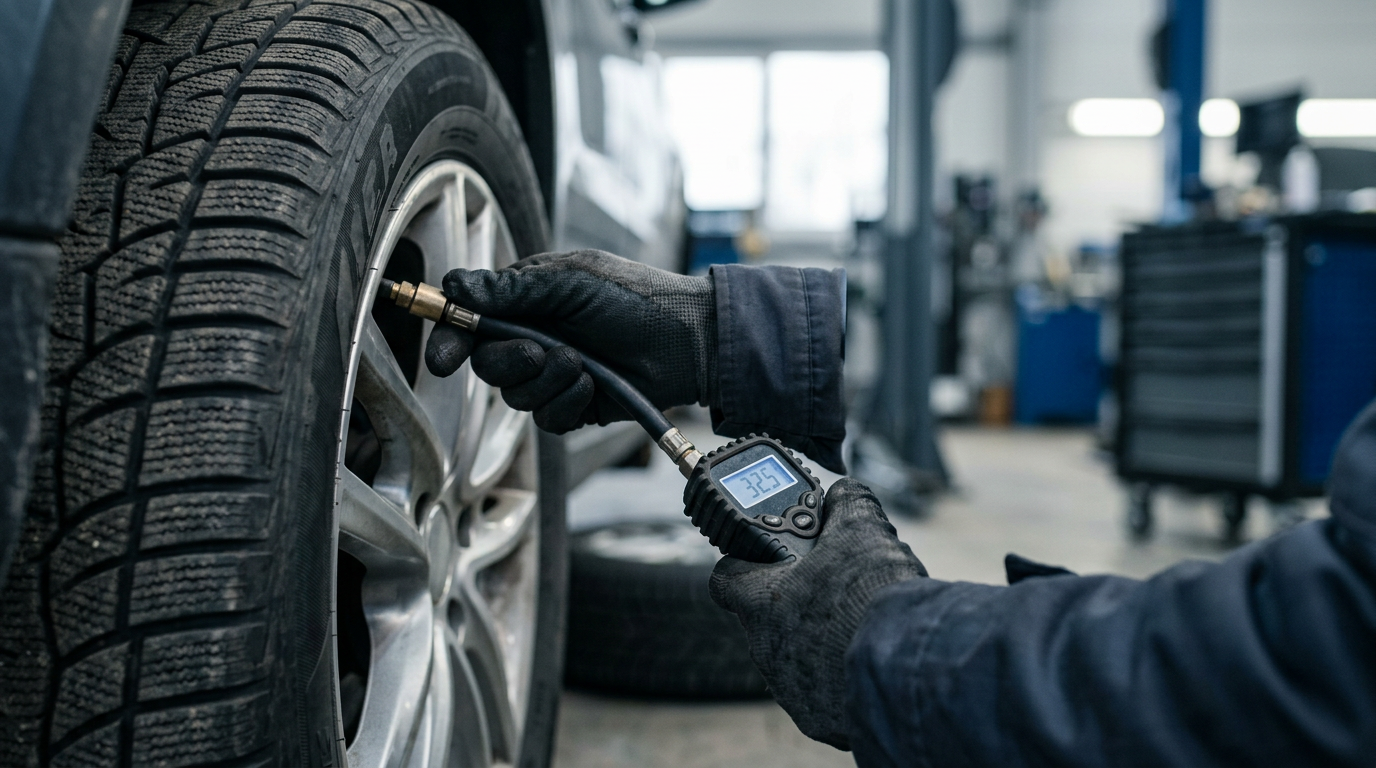
Mechanic using a digital pressure gauge to check the air pressure of a car tire in an auto repair shop. (Representative image for illustration purposes only. Actual vehicle may vary based on trim and configuration.)

You should check your Nissan vehicle's tire pressure at least once a month during a Connecticut winter, as well as whenever outdoor temperatures drop suddenly by 10 degrees or more. To help local drivers prepare their vehicles for freezing roads, we sat down with our Service Advisor at Barberino Nissan to get expert insights on winter tires, battery maintenance, brake inspections, and Intelligent All-Wheel Drive.

Q: How often should I check my Nissan’s tire pressure during a Wallingford winter?

A: You need to check your tire pressure at least once every four weeks throughout the winter season, and immediately after any rapid ambient temperature decline. For every 10-degree drop in outdoor temperature, inflation pressure decreases by roughly 1 PSI. During New England cold snaps, a tire properly set to 32 PSI in mild autumn weather can easily drop into the upper 20s, which reduces fuel efficiency, compromises handling, and causes uneven tread wear across the shoulders of the tire.

Checking your pressure when the tires are cold—meaning the vehicle has been parked for at least three hours—gives you the most accurate reading. You should always reference the exact inflation numbers listed on the driver-side door jamb placard rather than the maximum pressure stamped on the tire sidewall itself. Our technicians regularly see vehicles coming through our service center on North Colony Road with underinflated tires that trigger the dashboard warning light after the first hard freeze. If your Tire Pressure Monitoring System alerts you, or if you prefer a quick top-off using recalibrated commercial gauges, you can give our team a call at (203) 265-1611 to swing by for a pressure check.

Q: How does extreme cold weather affect Nissan car battery life and performance?

A: Freezing temperatures slow down internal chemical reactions inside lead-acid batteries, which reduces total electrical cranking capacity by up to 50 percent at zero degrees Fahrenheit. At the same time, cold engine oil thickens, requiring significantly more electrical energy from the starter motor to turn the crankshaft over. This dual strain makes late autumn and early winter the prime period for sudden battery failure, particularly on units that are three years old or older.

Early warning signs of a weakening battery include a slow, laboring engine crank when turning the ignition key, dimming headlights while idling, or flickering interior displays upon startup. For vehicles operating in harsh northern climates, installing an AGM battery or replacing an aging flooded unit with a high cold-cranking-amps rating—typically between 550 CCA and 700 CCA depending on engine size—ensures swift starting power on sub-zero mornings. Daily drivers commuting into New Haven encounter heavy traffic that can prevent an older battery from fully recharging during short trips, making routine load testing essential. You can stop by our Nissan Express Service lane for a swift battery health check without needing a prior appointment.

Q: At what temperature should winter tires be installed on a Nissan?

A: Dedicated winter tires should be mounted onto your vehicle as soon as daily high temperatures consistently remain below 45 degrees Fahrenheit. All-season tire rubber compounds contain flexible polymers engineered for warm and moderate weather, but these compounds begin to stiffen and lose elasticity when ambient temperatures fall below that threshold. Once the rubber hardens, the tire cannot conform to tiny road imperfections, which increases stopping distances even on completely dry pavement.

Winter tires utilize specialized silica-infused rubber compounds designed to remain soft and pliable in sub-freezing conditions, paired with dense tread siping that bites directly into packed snow and ice. Swapping your tires before the first snowstorm arrives protects your wheels from sudden curb impacts and provides predictable steering response during early morning black ice conditions. Drivers operating electric Nissan models should pay extra attention to seasonal tire switches, as instant electric torque requires maximum rubber pliability to prevent wheel slip on chilly asphalt.

"All-wheel drive helps you accelerate on slippery roads, but winter tires are what actually stop you when ice appears."

Q: How does Nissan Intelligent All-Wheel Drive assist with winter driving in snow and ice?

A: Nissan Intelligent All-Wheel Drive continuously monitors wheel rotation, throttle position, and steering angles to automatically distribute engine power between the front and rear axles within milliseconds. Under normal cruising conditions on dry roads, the system routes power exclusively to the front wheels to maximize fuel efficiency. As soon as sensors detect front wheel slippage on slush, snow, or patch ice, hydraulic clutches engage to transfer up to a 50/50 split of engine torque to the rear wheels.

This predictive power transfer stabilizes the chassis before severe wheelspin occurs, helping drivers accelerate confidently from a complete stop on icy inclines or navigate unplowed residential side streets. Crossovers and sedans equipped with this system, including options in our new Nissan Altima inventory, combine vehicle dynamic control with precise throttle management to keep the car tracking straight through slushy highway lane changes.

Q: Does Nissan Intelligent AWD eliminate the need for dedicated winter tires?

A: All-wheel drive enhances vehicle acceleration and forward traction, but it does not improve lateral cornering grip or reduce braking distances on ice and packed snow. Every vehicle on the road—whether front-wheel drive, rear-wheel drive, or all-wheel drive—relies entirely on four contact patches of rubber to stop and steer. When you press the brake pedal, all four brakes engage equally regardless of your drivetrain configuration.

Drivers who rely solely on all-season tires with all-wheel drive often experience a false sense of security because the vehicle accelerates easily from rest. However, when approaching an icy intersection or emergency stopping scenario, an all-season tire lacking specialized tread siping and soft cold-weather rubber will slide significantly farther than a winter tire. Pairing an advanced all-wheel-drive system with true winter tires gives you the ultimate setup for handling severe New England winter storms safely.

Q: How much does a pre-winter brake inspection and service cost for a Nissan?

A: A standalone pre-winter brake inspection typically costs between $50 and $100, though it is often included as part of a multi-point winter checkup at certified facilities. If inspection reveals worn friction material or scored rotors, full brake pad and rotor replacement per axle generally ranges from $250 to $450, depending on your specific vehicle model and whether OEM ceramic pads are selected.

Road salt and liquid magnesium chloride used on freezing highways accelerate surface rust on steel brake rotors and can cause sliding caliper pins to seize if left uncleaned. During a pre-winter service, technicians measure friction material to ensure pads exceed the safe minimum threshold of 4/32 of an inch, inspect flexible rubber brake lines for cracks, and check brake fluid for moisture contamination. Excessive moisture lowers the boiling point of the fluid and can create a spongy pedal feeling during hard stops.

If you notice high-pitched squealing, steering wheel vibration while braking, or an extended pedal stroke, getting your vehicle evaluated before snow arrives prevents costly rotor damage and ensures reliable stopping power. Should an unexpected mechanical issue or flat tire leave you stranded during severe winter conditions, remember that factory coverage provides dedicated assistance through Nissan Roadside Assistance: 800-225-2476 for towing to certified care centers. You can reserve a convenient checkup time through our online service scheduler, visit us directly at our 505 N Colony Rd address, or contact our service desk directly at (203) 265-1611 to keep your vehicle winter-ready.


© 2026 Barberino Nissan. All rights reserved.
Vehicle specification data © JATO Dynamics Limited.

Posted in:

Related Posts

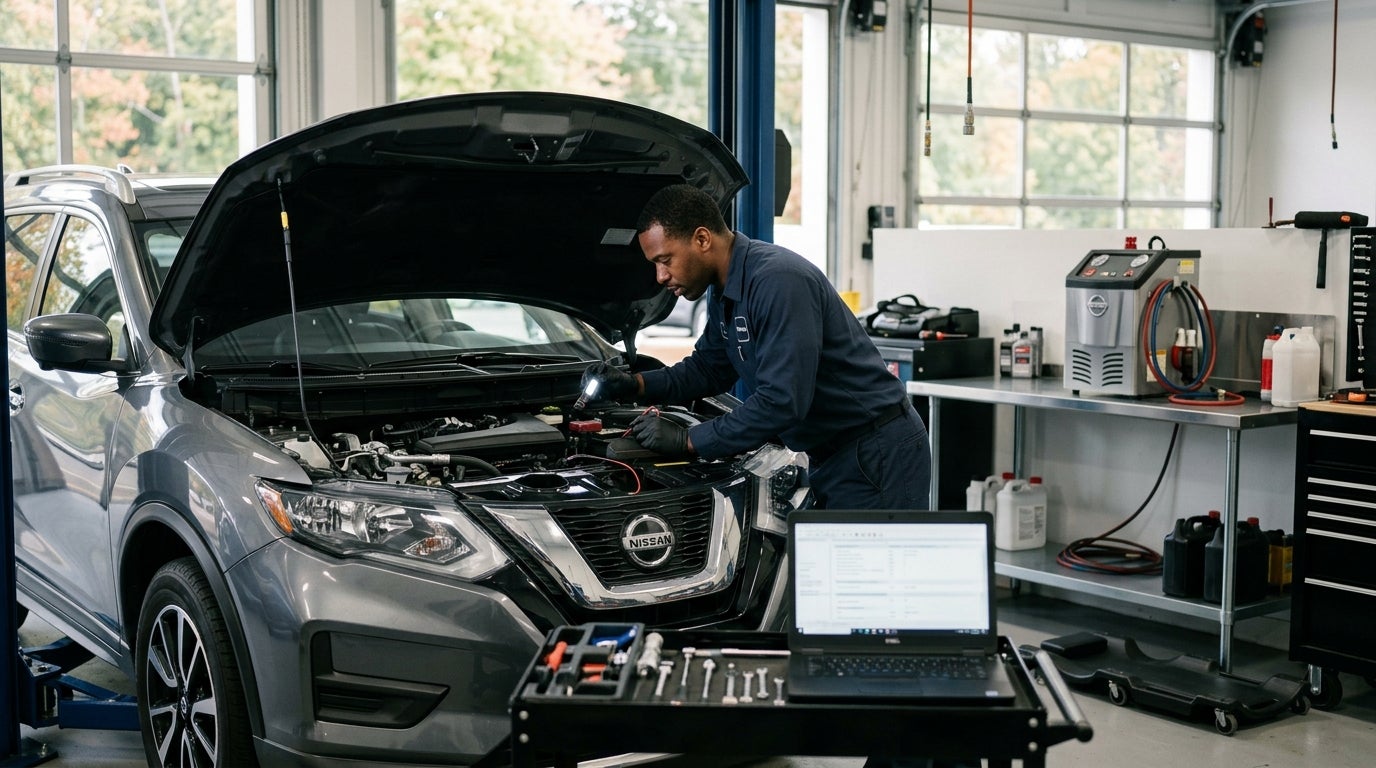
Mechanic using diagnostic tools under the open hood of a grey Nissan SUV in an auto repair shop. (Representative image for illustration purposes only. Actual vehicle may vary based on trim and configuration.)

Nissan CVT Maintenance: What Your Xtronic Transmission Needs and When

As a Service Director here at Barberino Nissan with over 10 years of experience servicing Nissan vehicles, I am always eager to clear up common questions about continuously variable transmissions. Towing heavy loads beyond your vehicle's rated towing capacity will damage a Nissan Xtronic CVT by generating extreme hydraulic heat and placing severe mechanical strain on the steel belt and pulley assembly. However, as long as you tow within your vehicle's official weight limits, monitor fluid temperatures, and follow severe-service fluid change schedules, your transmission can handle regular trailering without issues. The core technology behind the Xtronic CVT relies on two adjustable steel pulleys connected by a high-strength steel chain-belt. Unlike traditional automatic gearboxes that shift between fixed gears, the CVT continuously adjusts the pulley diameters to maintain the optimal gear ratio for power and fuel efficiency. When you pull heavy loads up steep inclines, such as the rolling terrain near Wallingford, the engine stays in higher rpm bands for longer periods. This sustained pressure increases fluid friction and rapidly heats up the transmission fluid. Excessive heat is the primary enemy of any continuous variable transmission. When fluid temperatures rise unchecked, the protective film on internal moving parts thins out, leading to belt slippage, metal wear, and reduced hydraulic clamping pressure. If you regularly haul utility trailers or recreational equipment, installing an auxiliary transmission cooler and changing your fluid at recommended severe-duty intervals will safeguard your drivetrain. You can contact our technicians by giving us a quick call or visiting our Wallingford service center to inspect your towing setup before hitting the road. How Often Does a Nissan Xtronic CVT Require Fluid Service? A Nissan Xtronic CVT requires a visual fluid inspection every 7,500 miles or 12 months, with full fluid replacement typically recommended between 30,000 and 60,000 miles depending on your driving habits. Vehicles subjected to severe driving conditions—including frequent towing, heavy city traffic, or extreme seasonal temperature swings—should have their transmission fluid replaced every 30,000 miles. During routine maintenance visits, our team relies on advanced Nissan Consult diagnostic tools to scan the transmission control module for a CVTF deterioration date value. This digital metric tracks historical heat stress and operational loads rather than just counting odometer miles. If the scan indicates high thermal breakdown, we recommend a fluid change even if you have not hit the standard mileage mark yet. Staying proactive with this service protects sensitive internal hydraulic valves and smooth pulley operation. Skipping these inspections allows oxidized fluid and tiny metal particles to circulate through the valve body, which can clog internal ports and cause jerky acceleration. For busy commuters looking for fast routine checks between major service windows, our convenient Nissan Express Service option provides quick multi-point inspections to keep your vehicle running smoothly. Table of Contents Can Standard ATF Fluid Be Used in a Nissan Xtronic CVT? What Causes a Nissan CVT to Enter Limp Mode? How Long Do Modern Nissan Xtronic CVT Transmissions Last with Proper Maintenance? What Is D-Step Logic and How Does JATCO Engineering Impact Performance? What Xtronic CVT Maintenance Services Are Offered at Barberino Nissan? Can Standard ATF Fluid Be Used in a Nissan Xtronic CVT? Standard automatic transmission fluid must never be used in a Nissan Xtronic CVT under any circumstances. CVTs require highly specialized synthetic fluids, such as Genuine Nissan NS-3 CVT Fluid or NS-2 depending on model specifications, which are engineered specifically to provide necessary traction between the smooth steel belt and pulleys. Traditional automatic transmission fluids contain friction-modifying additives designed for slipping clutch packs. If introduced into a CVT, traditional fluid will eliminate the precise surface friction required for the steel belt to grip the rotating pulleys. This results in immediate belt slippage, catastrophic thermal buildup, and permanent scoring across the pulley faces within miles of driving. NS-3 CVT Fluid: Formulated for modern high-pressure Xtronic CVT systems to withstand elevated thermal stress and prevent oxidation. Viscosity Control: Maintains steady hydraulic pressure across extreme temperature ranges to ensure rapid pulley adjustments. Anti-Foaming Properties: Prevents air bubble formation within high-pressure hydraulic lines during high-rpm operation. Using non-approved fluid or generic aftermarket ATF can also void your factory drivetrain warranty coverage. Whenever your vehicle comes into our service bay, we only use genuine factory-formulated fluids designed specifically for your transmission's internal engineering. What Causes a Nissan CVT to Enter Limp Mode? A Nissan transmission enters fail-safe or limp mode primarily when internal fluid temperatures exceed safe operating limits, triggering the control module to reduce engine output and lock vehicle speed. This protective system engages to prevent permanent mechanical failure while allowing you to safely pull off the road. Sustained high-speed highway driving during summer heat, combined with old or degraded fluid, is a frequent trigger for limp mode. As fluid degrades, its thermal conductivity drops, causing heat to build up inside the transmission casing faster than the cooling radiator can shed it. When the transmission computer senses temperatures rising past critical thresholds, it limits engine torque and restricts acceleration to protect internal seals and metal surfaces. Other potential causes for limp mode include low fluid levels caused by small cooler line leaks, faulty speed sensors, or an obstructed transmission fluid cooler. If your vehicle ever enters limp mode, pull over safely, turn off the engine, and allow the system to cool down completely. Having a certified technician pull diagnostic trouble codes is essential to resolve the underlying heat issue before returning to normal highway driving. How Long Do Modern Nissan Xtronic CVT Transmissions Last with Proper Maintenance? With regular fluid replacements every 30,000 to 60,000 miles and gentle driving habits, modern Nissan Xtronic CVT transmissions routinely last between 150,000 and 200,000 miles. Preventing excessive heat and maintaining clean fluid are the two most critical factors in maximizing total drivetrain longevity. Many drivers who daily commute into New Haven face dense traffic and frequent stop-and-go acceleration, which can generate extra heat compared to steady highway cruising. Drivetrain engineering has advanced significantly over recent design generations, featuring stronger steel belts, refined hydraulic pump controls, and improved thermal management systems that resist wear far better than early continuous variable designs. Taking care of your drivetrain is part of overall vehicle health, much like staying on top of specialized maintenance schedules for advanced powertrains, including electric vehicle maintenance programs. Treating your transmission with clean fluid, allowing warm-up time on cold mornings, and avoiding aggressive jackrabbit starts will ensure your car remains reliable for years to come. What Is D-Step Logic and How Does JATCO Engineering Impact Performance? D-Step Logic is proprietary transmission software programming developed by JATCO and Nissan that simulates traditional stepped gear shifts during moderate to heavy acceleration. This system provides drivers with a responsive, familiar acceleration feel while eliminating the continuous high-rpm engine drone associated with older continuous variable transmissions. Built by JATCO —the primary transmission manufacturing partner for Nissan—modern Xtronic CVT units combine wide ratio spreads with precision electronic hydraulic valves. Under light throttle, the system continuously adjusts ratios for optimal fuel economy. When you press firmly on the accelerator pedal, D-Step Logic momentarily holds pre-set ratio points to create subtle, crisp drops in rpm that feel just like a conventional multi-speed automatic gearbox. This software refinement improves driving engagement without sacrificing any of the smooth efficiency benefits inherent to variable pulley designs. Whether you are driving a efficient daily sedan or an option from our pre-owned performance collection, the combination of strong mechanical pulleys and smart software delivers refined performance across every driving scenario. What Xtronic CVT Maintenance Services Are Offered at Barberino Nissan? At Barberino Nissan, our certified technicians offer complete Xtronic CVT diagnostic and maintenance services using specialized factory tools and genuine OEM parts. From electronic fluid deterioration scans to complete fluid flushes and filter replacements, we ensure your drivetrain gets exact manufacturer care. When you bring your vehicle to our facility, our technicians perform a full visual and digital checkup on your transmission system: Diagnostic Deterioration Scanning: Checking digital heat logs via Nissan Consult equipment to determine exact fluid condition. Genuine Fluid Replacement: Draining degraded fluid and refilling with factory-approved NS-3 CVT Fluid. Filter & Screen Inspection: Cleaning internal fluid strainers and replacing external inline filters to restore hydraulic flow. Cooling System Checks: Inspecting transmission cooler lines, fittings, and thermal bypass valves for leaks or blockages. Protecting your drivetrain starts with regular, professional care. You can easily schedule your service appointment online today or call our service desk at (203) 265-1611. Our team is conveniently located at our 505 N Colony Rd address, ready to keep your Nissan driving with smooth confidence. © 2026 Barberino Nissan. All rights reserved.

A copper Nissan SUV driving along a wet, winding forest road surrounded by autumn trees. (Representative image for illustration purposes only. Actual vehicle may vary based on trim and configuration.)

Preparing Your Nissan for Autumn Roads

Autumn in New England brings a beautiful transition, but the combination of falling leaves, cooler mornings, and unpredictable wet weather demands proactive vehicle care. As the heat of summer fades, the physical components of your vehicle undergo stress from rapid temperature fluctuations. Preparing your vehicle before the first frost is the most effective way to ensure consistent reliability, safety, and efficiency throughout the season. For commuters who leave their vehicles parked at the Wallingford train station during the day, the rapid shift in afternoon temperatures can stress battery chemistry and drop tire pressure before the drive home. Whether you drive a versatile crossover like the new Nissan Rogue or a family SUV like the new Nissan Pathfinder, sticking to the factory-recommended service intervals ensures your vehicle remains reliable. For those driving a daily commuter like the new Nissan Altima, keeping up with seasonal inspections prevents unexpected breakdowns. Even if you have transitioned to an electric vehicle, scheduling specialized Nissan EV maintenance ensures your battery and regenerative braking systems are optimized for the cold. Every standard factory maintenance visit at Barberino Nissan begins with a complimentary multi-point inspection. Our certified technicians evaluate the essential systems of your vehicle, including: Fluid Levels: Inspecting and topping off vital lubricants, brake fluid, engine coolant, and windshield washer fluid. Braking System: Measuring brake pad thickness and checking the condition of rotors and calipers. Battery Health: Testing cold cranking amps and inspecting terminals for corrosion. Belts and Hoses: Checking for wear, cracking, or softening caused by summer heat. Table of Contents Routine Oil Changes and Tire Rotations for Fall Commutes Understanding Severe vs. Normal Driving Conditions Crucial Inspections for the 60,000-Mile Nissan Service Interval How Sticking to the Factory Schedule Protects Your Vehicle's Resale Value Common Questions About Fall Nissan Maintenance Schedule Your Seasonal Nissan Service at Barberino Nissan Routine Oil Changes and Tire Rotations for Fall Commutes A drop of just ten degrees in outdoor temperature can cause tire pressure to decrease by roughly 1 psi, making routine autumn tire checks a safety necessity. Drivers navigating the coastal plain near New Haven often face damp, salty air from Long Island Sound, which accelerates the oxidation of brake rotors and causes tires to lose traction on slick morning asphalt. Our service advisors frequently note that drivers who stay on top of their 5,000-mile rotation intervals experience significantly more even tread wear and better handling when autumn rains make local roads slick. For the majority of late-model Nissan vehicles, a standard oil change and tire rotation is recommended every 5,000 to 7,500 miles or every 6 months. Clean engine oil is critical for protecting internal engine components from friction and heat. Over time, oil breaks down and loses its lubricating properties, which can lead to carbon buildup and reduced fuel efficiency. Replacing the oil filter at the same time ensures that harmful contaminants are kept out of your engine. To keep your vehicle performing safely, you can easily schedule a service appointment online with our factory-trained technicians. Our team uses only genuine parts and fluids that meet exact factory specifications, ensuring your vehicle receives the precise care it requires. Understanding Severe vs. Normal Driving Conditions Many drivers assume that severe driving conditions only apply to vehicles used for heavy commercial hauling or extreme off-road driving. However, the official Nissan maintenance guidelines classify many common daily driving habits under the severe category. If your typical routine involves any of the following patterns, your vehicle requires more frequent maintenance intervals to prevent premature wear: Repeated short trips of less than 10 miles where the engine does not reach full operating temperature. Frequent stop-and-go driving in heavy commuter traffic. Extensive idling or driving in dusty, muddy, or salt-treated environments. Towing a trailer, using a roof rack, or carrying heavy cargo loads. Under severe operating conditions, vital lubricants degrade much faster than they would during steady highway cruising. For example, frequent short trips prevent the engine oil from getting hot enough to evaporate condensed moisture and fuel, leading to oil dilution and sludge formation. To protect your engine, Nissan recommends shortening your oil change interval to 5,000 miles or 6 months under these conditions. If you are unsure which maintenance schedule fits your daily habits, you can consult with the experts on our service team and meet our service advisors who can customize a plan for your specific vehicle. We will help you balance your driving habits with factory recommendations to keep your vehicle running efficiently. Crucial Inspections for the 60,000-Mile Nissan Service Interval What happens when your odometer hits the major milestone of 60,000 miles? This interval is one of the most comprehensive checkpoints in your vehicle's maintenance schedule. At this stage, several critical fluids and components require detailed inspection or complete replacement to prevent long-term mechanical issues. During a standard 60,000-mile service, our certified technicians focus on key powertrain and chassis systems: CVT Fluid Replacement: For vehicles equipped with an Xtronic CVT, clean transmission fluid is vital. While normal schedules call for fluid inspections, severe-service guidelines recommend replacing the CVT fluid near this milestone to protect the high-strength steel belt and pulley system. Engine Coolant Flush: Replacing the engine coolant ensures proper freeze protection and corrosion resistance before the first hard winter frost. Spark Plug Replacement: Worn spark plugs can cause engine misfires, rough idling, and a drop in fuel economy. Replacing them restores optimal combustion. Driveline Fluid Service: For all-wheel-drive models, such as the Platinum trim of the Nissan Murano, technicians inspect and replace transfer case and rear differential fluids. Before booking your major mileage milestone service, be sure to review our current service and parts information to take advantage of seasonal savings on fluids, filters, and brake components. Addressing these maintenance items on time prevents costly repairs down the road. How Sticking to the Factory Schedule Protects Your Vehicle's Resale Value A fully documented service history is one of the most powerful tools an owner has when it comes time to trade in or sell a vehicle. Prospective buyers and dealerships look for tangible proof that a vehicle has been cared for according to manufacturer specifications. Consistent maintenance records show that the engine, transmission, and braking systems have been kept in optimal condition, which directly translates to a higher resale value. Sticking to the factory schedule also ensures that your vehicle remains compliant with its warranty terms. The standard 3-year/36,000-mile bumper-to-bumper warranty and the 5-year/60,000-mile powertrain warranty require regular maintenance to remain fully active. If a component fails due to a lack of scheduled upkeep, the repair may not be covered under warranty. By servicing your vehicle at Barberino Nissan, all of your maintenance records are automatically logged into the national database. This seamless digital record-keeping provides future buyers with absolute confidence in the vehicle's history, protecting your investment from the day you drive off the lot to the day you decide to upgrade. Common Questions About Fall Nissan Maintenance Q: What is the recommended fall maintenance schedule for a Nissan? A proper fall service checklist includes inspecting the battery charge, measuring tire tread depth, checking all fluid levels, and replacing worn wiper blades. These preventative steps ensure your vehicle is prepared for the rapid temperature drops and wet road conditions of autumn. Q: How often should I change my Nissan's cabin air filter before winter? Most cabin air filters should be replaced every 15,000 to 20,000 miles, or at least once a year. Replacing the filter in the fall ensures your climate control and defrosting systems have strong, unrestricted airflow to clear morning frost from your windshield quickly. Q: What tire pressure is recommended for autumn temperature drops? The correct tire pressure for your vehicle is listed on the placard inside the driver-side door jamb. Because tire pressure drops roughly 1 psi for every 10°F decrease in temperature, checking your tires monthly during the fall helps maintain proper traction and fuel efficiency. Q: Should I get my Nissan battery tested before winter? Yes, having a professional battery load test performed in the fall is highly recommended. Cold temperatures reduce a battery's cranking power, and identifying a weak battery before the first hard frost prevents unexpected starting failures. Q: Does Barberino Nissan offer certified express maintenance services? Yes, our service department offers rapid, high-quality maintenance through our certified express service program. Drivers can get routine services like oil changes, tire rotations, and battery tests completed quickly without needing a formal, long-term appointment. Schedule Your Seasonal Nissan Service at Barberino Nissan Do not wait for the first frost of the season to find out your battery is weak or your tires lack traction. Taking a proactive approach to your vehicle's maintenance schedule is the single most effective way to ensure safety, efficiency, and reliability all autumn long. Our factory-trained technicians at Barberino Nissan are equipped with specialized diagnostic tools and genuine parts to keep your vehicle performing at its best. For added peace of mind on the road, remember that Nissan vehicles are backed by manufacturer support. If you ever experience an unexpected issue, you can reach Nissan Roadside Assistance: 800-225-2476 for immediate, brand-specific towing and emergency services. To schedule your fall maintenance, visit us at 505 N Colony Rd, Wallingford, CT 06492 or call our service department at (203) 265-1611 today. Let our dedicated team help you prepare your vehicle for the road ahead. © 2026 Barberino Nissan. All rights reserved.

Dark blue sedan parked in a suburban driveway with a colorful school backpack resting on the asphalt beside it. (Representative image for illustration purposes only. Actual vehicle may vary based on trim and configuration.)

Tire Codes: A Service Manager's Guide to Back-to-School Road Safety

As a Service Manager here at Barberino Nissan with over 10 years of experience, I see firsthand how seasonal shifts impact vehicle performance. Late August brings a distinct shift in local traffic patterns as parents prepare for the busy academic year. This busy period of school drop-offs and extra-curricular activities places a significant demand on your vehicle, making a comprehensive safety check essential. Before you load up your vehicle with heavy backpacks and sports gear for daily trips around Wallingford, taking a close look at your rubber is the single most important step you can take. Your tires are the only point of contact between your vehicle and the pavement, directly influencing braking distances, steering precision, and overall passenger safety. If you want to ensure your vehicle is completely prepared for the busy months ahead, you can easily book an appointment using our online service scheduler today. Our factory-trained technicians are always ready to inspect your tread, adjust your pressures, and show you why local drivers choose our service department for their routine maintenance needs. Decoding the Alphanumeric Code on Your Nissan Tire Sidewall Have you ever looked closely at the raised lettering on your tire sidewall and wondered what that string of characters actually represents? Understanding these markings is crucial because they specify the exact engineering standards required to keep your vehicle operating safely. Let's break down a common tire size, such as P215/60R16, which you might find on dependable commuter sedans like the New Nissan Altima. The initial letter "P" stands for passenger, indicating the tire is designed for standard passenger vehicles, while an "LT" prefix would denote a light truck tire designed for heavier payloads. The first three-digit number, 215, represents the section width of the tire in millimeters from sidewall to sidewall. The two-digit number following the slash, 60, is the aspect ratio, which means the sidewall height is 60 percent of the tire's total width. Next in the sequence is the letter "R", which designates radial construction, the modern industry standard that utilizes internal plies running radially across the tire to deliver superior flexibility and strength. The final two-digit number, 16, indicates the wheel diameter in inches, meaning this specific tire must only be mounted on a 16-inch rim. Whether you are driving highly popular crossover models like the New Nissan Rogue or any other model, matching these physical dimensions is the first step to maintaining factory ride quality. If you need a quick inspection or a replacement set before the school year begins, our team can assist you immediately through our express service lane without a prior appointment. Table of Contents Understanding Tire Load Indexes and Speed Ratings on Your Altima or Rogue Where to Find the Correct Factory Tire Specifications for Your Nissan Tire Laws and the Critical Danger of Dry Rot and Aging Rubber Choosing a Professional Nissan Tire Service Center Understanding Tire Load Indexes and Speed Ratings on Your Altima or Rogue While physical dimensions tell you if a tire physically fits on your wheel, the numbers and letters that follow the diameter dictate how that tire performs under stress. The load index is a numerical code, such as 94, which specifies the maximum weight a single tire can safely support when properly inflated. For example, a load index of 94 translates to a carrying capacity of 1,477 pounds per tire. Directly following this number is the speed rating, represented by a letter that indicates the maximum sustained speed the tire can safely handle under its rated load. Common ratings for everyday commuter vehicles include T, which is approved for speeds up to 118 mph, and H, which is approved for up to 130 mph. These ratings also reflect how effectively the tire manages heat buildup during highway driving, which is critical for preventing sudden tire failures on hot summer afternoons. If you are planning to upgrade your wheels or need to replace a damaged tire, keeping these performance ratings matched to your factory specifications prevents handling imbalances. For those planning out their yearly vehicle maintenance budgets or looking into unexpected repair costs, contact our service team about financing options online to help plan your upcoming maintenance expenses. Where to Find the Correct Factory Tire Specifications for Your Nissan When I walk families through a routine multi-point inspection, I always show them how to locate their vehicle's official tire placard. Many drivers mistakenly rely on the maximum inflation number molded directly into the tire sidewall, which is actually the maximum pressure the tire can hold, not the recommended operating pressure. The highly accurate, factory-recommended specifications are located on the Tire and Loading Information label, which is permanently attached to the driver’s side door jamb. This placard lists the precise cold inflation pressure required for both the front and rear tires, as well as the exact tire size and load limits engineered for your specific model. Checking your tire pressures when they are cold—meaning the vehicle has been parked for at least three hours—ensures you get an accurate reading. Relying on the correct door jamb specifications ensures your tire pressure monitoring system functions correctly and prevents premature, uneven tread wear. If you ever have difficulty reading your door placard or want a professional to verify your specifications, you can consult with our team of certified service advisors for expert guidance. Tire Laws and the Critical Danger of Dry Rot and Aging Rubber Many drivers believe that a tire is perfectly safe as long as it has deep tread grooves remaining. However, the physical age of the rubber is just as critical as the tread depth because tires naturally degrade over time due to environmental exposure. In Connecticut, the minimum legal tread depth is 2/32 of an inch, which you can easily test by placing a penny upside down into the tread; if you can see the top of Lincoln's head, your tires are legally worn out. Even if your tread passes the penny test, older tires are highly susceptible to dry rot, a condition where the rubber becomes brittle, develops fine cracks, and loses its structural integrity. You can determine the exact age of your tires by locating the DOT code on the sidewall and reading the final four digits, where the first two digits represent the week and the last two represent the year of manufacture. For example, a code ending in 2524 indicates the tire was manufactured in the 25th week of 2024. Industry safety standards recommend replacing any tire that is six to ten years old, regardless of how much tread is left, to prevent tread separation or sudden blowouts. To help keep your vehicle safe and compliant with local safety standards, we recommend reviewing our monthly service offers for helpful options on maintenance and replacement parts. Choosing a Professional Nissan Tire Service Center A daily commute down Interstate 91 toward New Haven demands a tire setup that is perfectly balanced and aligned. Entrusting your vehicle to a specialized service center ensures that your tires are mounted, balanced, and aligned using state-of-the-art diagnostic equipment. A precise wheel alignment prevents your vehicle from pulling to one side and protects your new tires from rapid, uneven wear caused by suspension misalignment. Additionally, proper tire balancing eliminates high-speed vibrations that can damage your suspension components over time and cause driver fatigue. If you ever experience an unexpected flat tire or roadside emergency, remember that factory-backed protection is always available through Nissan Roadside Assistance: 1-800-225-2476, which connects you directly to manufacturer-certified support. For routine care, professional installations, or to drop off your vehicle, you can easily find us at our Wallingford service center located at 505 N Colony Rd, Wallingford, CT 06492. Please feel free to give our service team a call directly at (203) 265-1611 to speak with an advisor, and be sure to check our current maintenance offers before your next visit. © 2026 Barberino Nissan. All rights reserved.