

You should check your Nissan vehicle's tire pressure at least once a month during a Connecticut winter, as well as whenever outdoor temperatures drop suddenly by 10 degrees or more. To help local drivers prepare their vehicles for freezing roads, we sat down with our Service Advisor at Barberino Nissan to get expert insights on winter tires, battery maintenance, brake inspections, and Intelligent All-Wheel Drive. Q: How often should I check my Nissan’s tire pressure during a Wallingford winter? A: You need to check your tire pressure at least once every four weeks throughout the winter season, and immediately after any rapid ambient temperature decline. For every 10-degree drop in outdoor temperature, inflation pressure decreases by roughly 1 PSI. During New England cold snaps, a tire properly set to 32 PSI in mild autumn weather can easily drop into the upper 20s, which reduces fuel efficiency, compromises handling, and causes uneven tread wear across the shoulders of the tire. Checking your pressure when the tires are cold—meaning the vehicle has been parked for at least three hours—gives you the most accurate reading. You should always reference the exact inflation numbers listed on the driver-side door jamb placard rather than the maximum pressure stamped on the tire sidewall itself. Our technicians regularly see vehicles coming through our service center on North Colony Road with underinflated tires that trigger the dashboard warning light after the first hard freeze. If your Tire Pressure Monitoring System alerts you, or if you prefer a quick top-off using recalibrated commercial gauges, you can give our team a call at (203) 265-1611 to swing by for a pressure check. Q: How does extreme cold weather affect Nissan car battery life and performance? A: Freezing temperatures slow down internal chemical reactions inside lead-acid batteries, which reduces total electrical cranking capacity by up to 50 percent at zero degrees Fahrenheit. At the same time, cold engine oil thickens, requiring significantly more electrical energy from the starter motor to turn the crankshaft over. This dual strain makes late autumn and early winter the prime period for sudden battery failure, particularly on units that are three years old or older. Early warning signs of a weakening battery include a slow, laboring engine crank when turning the ignition key, dimming headlights while idling, or flickering interior displays upon startup. For vehicles operating in harsh northern climates, installing an AGM battery or replacing an aging flooded unit with a high cold-cranking-amps rating—typically between 550 CCA and 700 CCA depending on engine size—ensures swift starting power on sub-zero mornings. Daily drivers commuting into New Haven encounter heavy traffic that can prevent an older battery from fully recharging during short trips, making routine load testing essential. You can stop by our Nissan Express Service lane for a swift battery health check without needing a prior appointment. Q: At what temperature should winter tires be installed on a Nissan? A: Dedicated winter tires should be mounted onto your vehicle as soon as daily high temperatures consistently remain below 45 degrees Fahrenheit. All-season tire rubber compounds contain flexible polymers engineered for warm and moderate weather, but these compounds begin to stiffen and lose elasticity when ambient temperatures fall below that threshold. Once the rubber hardens, the tire cannot conform to tiny road imperfections, which increases stopping distances even on completely dry pavement. Winter tires utilize specialized silica-infused rubber compounds designed to remain soft and pliable in sub-freezing conditions, paired with dense tread siping that bites directly into packed snow and ice. Swapping your tires before the first snowstorm arrives protects your wheels from sudden curb impacts and provides predictable steering response during early morning black ice conditions. Drivers operating electric Nissan models should pay extra attention to seasonal tire switches, as instant electric torque requires maximum rubber pliability to prevent wheel slip on chilly asphalt. "All-wheel drive helps you accelerate on slippery roads, but winter tires are what actually stop you when ice appears." Q: How does Nissan Intelligent All-Wheel Drive assist with winter driving in snow and ice? A: Nissan Intelligent All-Wheel Drive continuously monitors wheel rotation, throttle position, and steering angles to automatically distribute engine power between the front and rear axles within milliseconds. Under normal cruising conditions on dry roads, the system routes power exclusively to the front wheels to maximize fuel efficiency. As soon as sensors detect front wheel slippage on slush, snow, or patch ice, hydraulic clutches engage to transfer up to a 50/50 split of engine torque to the rear wheels. This predictive power transfer stabilizes the chassis before severe wheelspin occurs, helping drivers accelerate confidently from a complete stop on icy inclines or navigate unplowed residential side streets. Crossovers and sedans equipped with this system, including options in our new Nissan Altima inventory, combine vehicle dynamic control with precise throttle management to keep the car tracking straight through slushy highway lane changes. Q: Does Nissan Intelligent AWD eliminate the need for dedicated winter tires? A: All-wheel drive enhances vehicle acceleration and forward traction, but it does not improve lateral cornering grip or reduce braking distances on ice and packed snow. Every vehicle on the road—whether front-wheel drive, rear-wheel drive, or all-wheel drive—relies entirely on four contact patches of rubber to stop and steer. When you press the brake pedal, all four brakes engage equally regardless of your drivetrain configuration. Drivers who rely solely on all-season tires with all-wheel drive often experience a false sense of security because the vehicle accelerates easily from rest. However, when approaching an icy intersection or emergency stopping scenario, an all-season tire lacking specialized tread siping and soft cold-weather rubber will slide significantly farther than a winter tire. Pairing an advanced all-wheel-drive system with true winter tires gives you the ultimate setup for handling severe New England winter storms safely. Q: How much does a pre-winter brake inspection and service cost for a Nissan? A: A standalone pre-winter brake inspection typically costs between $50 and $100, though it is often included as part of a multi-point winter checkup at certified facilities. If inspection reveals worn friction material or scored rotors, full brake pad and rotor replacement per axle generally ranges from $250 to $450, depending on your specific vehicle model and whether OEM ceramic pads are selected. Road salt and liquid magnesium chloride used on freezing highways accelerate surface rust on steel brake rotors and can cause sliding caliper pins to seize if left uncleaned. During a pre-winter service, technicians measure friction material to ensure pads exceed the safe minimum threshold of 4/32 of an inch, inspect flexible rubber brake lines for cracks, and check brake fluid for moisture contamination. Excessive moisture lowers the boiling point of the fluid and can create a spongy pedal feeling during hard stops. If you notice high-pitched squealing, steering wheel vibration while braking, or an extended pedal stroke, getting your vehicle evaluated before snow arrives prevents costly rotor damage and ensures reliable stopping power. Should an unexpected mechanical issue or flat tire leave you stranded during severe winter conditions, remember that factory coverage provides dedicated assistance through Nissan Roadside Assistance: 800-225-2476 for towing to certified care centers. You can reserve a convenient checkup time through our online service scheduler, visit us directly at our 505 N Colony Rd address, or contact our service desk directly at (203) 265-1611 to keep your vehicle winter-ready. © 2026 Barberino Nissan. All rights reserved. Vehicle specification data © JATO Dynamics Limited.
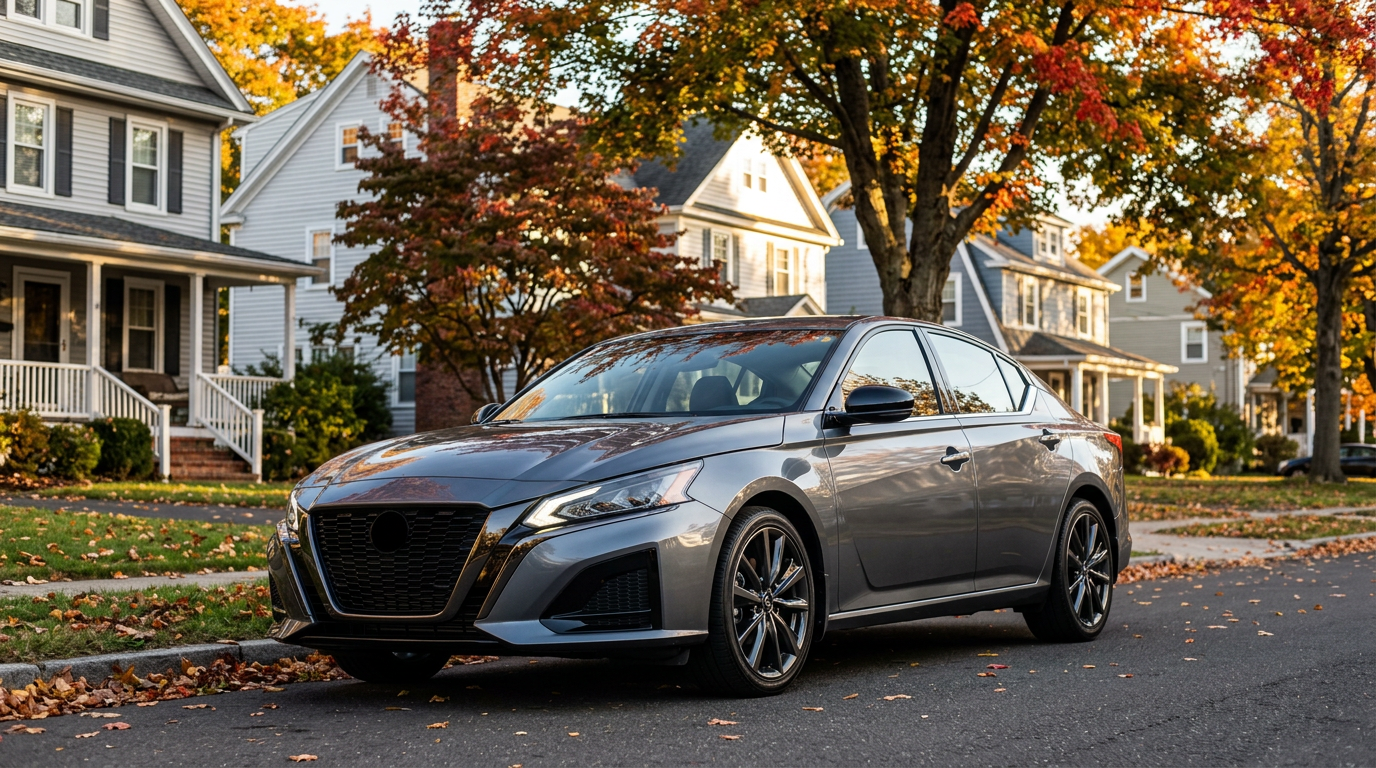
Unlock the Best Pre-Owned Nissan Altima Models for Reliability and Value at Barberino Nissan
What I Have Learned About Used Nissan Altima Years and Trims at Barberino Nissan Which Used Nissan Altima Model Years and Trims Hold Up Best? The 2017–2018 model years from the fifth generation and 2020–2023 model years from the sixth generation hold up best on the pre-owned market, particularly when equipped with the naturally aspirated 2.5-liter four-cylinder engine. Among trims, the SV and SR deliver the strongest long-term reliability and value balance, pairing enhanced driver-assist technology with refined Xtronic transmission tuning. As a Service Technician with over a decade of hands-on mechanical experience at Barberino Nissan, I spend my days under the hood inspecting vehicles that come through our service bay. When shoppers ask me which used sedan will give them years of trouble-free driving, I point them toward these specific midsize years. The 2017 and 2018 models represented the peak of the fifth generation, benefiting from mandatory standard Automatic Emergency Braking and updated CVT cooling logic that resolved earlier durability issues. The sixth-generation models introduced for 2019 brought an upgraded chassis and available Intelligent All-Wheel Drive. While 2019 was a solid redesign year, the 2020 through 2023 models are the real sweet spots because Nissan refined the software and mechanical hardware even further. Choosing the SV or SR trim gives you essential features like Blind Spot Warning, Rear Cross Traffic Alert, and Apple CarPlay without the added complexity of higher-maintenance suspension or turbo components. For local drivers navigating daily suburban commuting through Wallingford, a well-maintained 2.5-liter SV or SR delivers dependable performance and strong fuel economy year after year. If you want to check out our current selection in person or speak with our sales staff, you can reach our dealership team by calling (203) 265-1611 or by finding our showroom in Wallingford. Table of Contents Which Nissan Altima Model Years Are Most Reliable, and Which Years Should Be Avoided? What Is the Difference Between Nissan Altima S, SV, SR, and SL Trims? What Are the Common Symptoms of a Failing Altima CVT Transmission? How Does a Used Nissan Altima Compare to a Used Honda Accord? Is Buying a Certified Pre-Owned (CPO) Nissan Altima Worth the Extra Cost? Does a Used Nissan Altima Hold Its Resale Value Well? Which Nissan Altima Model Years Are Most Reliable, and Which Years Should Be Avoided? Transmission issues notably affect Nissan Altimas from 2002 to 2010 and 2013 to 2016, while models from 2011, 2012, 2017, 2018, and 2020 onward show higher reliability. Knowing the distinction between generation cycles is the single most effective way to shop smart. Models built between 2002 and 2010 suffered from early Xtronic CVT development growing pains, while the 2013 to 2016 models faced widespread owner complaints regarding transmission shudder, hesitations, and fluid overheating. Nissan corrected these concerns by redesigning the transmission valve body, updating control software, and improving fluid flow starting in the 2017 model year. When examining the powertrain specs across mid-cycle sixth-generation sedans, the standard 2.5-liter four-cylinder engine yields dependable outputs. Front-wheel drive configurations on trims like the 2.5 SV and 2.5 SR deliver 188 hp and 180 lb-ft of torque. Opting for available Intelligent All-Wheel Drive adjusts those output figures slightly to 182 hp and 178 lb-ft of torque while routing power through the Xtronic transmission to maintain traction in slippery conditions. For buyers comparing pre-owned longevity against brand-new choices, exploring our new Nissan inventory shows how these core mechanical setups continue to power current production models. Engine & Performance Powertrain specs by trim Feature 2.5 SR 2.5 SR AWD 2.5 SV 2.5 SV AWD Engine 2.5L 2.5L 2.5L 2.5L Horsepower 188 hp 182 hp 188 hp 182 hp Torque 180 lb-ft 178 lb-ft 180 lb-ft 178 lb-ft Transmission Xtronic Xtronic Xtronic Xtronic Drivetrain Front-wheel drive All-wheel drive Front-wheel drive All-wheel drive What Is the Difference Between Nissan Altima S, SV, SR, and SL Trims? The main differences across Nissan Altima trim levels center on technology, interior comfort, and suspension tuning, progressing from the essential S trim to the feature-packed SV, sport-oriented SR, and premium SL. The base S trim serves as the entry point, offering core necessities like power windows, push-button ignition, and standard Safety Shield 360 driver-assist technologies. Step up to the SV trim, and you unlock 17-inch alloy wheels, an 8-inch touchscreen with smartphone integration, power driver seating, and access to available Intelligent All-Wheel Drive. The SV strikes an outstanding balance for value-minded families who prioritize safety and daily convenience. The SR trim brings a sportier personality to the sedan lineup. It features 19-inch alloy wheels, a sport-tuned suspension, paddle shifters mounted on the steering wheel, and dark chrome exterior accents. Starting in 2019, the SR was also available with an optional 2.0-liter VC-Turbo engine producing up to 248 horsepower. The top-tier SL trim focuses on luxury features, equipping the cabin with leather-appointed seating, a 9-speaker Bose premium audio system, a power moonroof, heated front seats, and ProPILOT Assist for semi-autonomous highway driving ease. Shoppers looking for a balance of modern cabin technology and driver aids can browse our new Nissan Altima inventory to compare feature packages side by side. Pricing Pricing by trim Feature 2.5 SR 2.5 SR AWD 2.5 SV 2.5 SV AWD Base MSRP $28,980 $30,480 $27,580 $29,080 Destination charge $1,275 $1,275 $1,275 $1,275 What Are the Common Symptoms of a Failing Altima CVT Transmission? Common symptoms of a failing Xtronic CVT transmission include mechanical throttle lag, slipping between simulated gear ratios, vehicle shuddering under acceleration, a high-pitched whining noise from the engine bay at elevated RPMs, and sudden power drop-offs. When test-driving a pre-owned sedan, shoppers frequently ask me what specific mechanical signs indicate transmission wear. Early warnings often start subtly. You might press the accelerator pedal from a complete stop and experience a two-second delay before the vehicle responds, or feel a noticeable vibration through the floorboards when accelerating between 20 and 40 mph. This shuddering is frequently linked to degraded transmission fluid or worn internal pulley belts. Another red flag is a loud whining sound that increases in pitch as engine RPMs rise. This noise usually indicates that the transmission fluid has overheated or lost its hydraulic pressure capabilities. In severe cases, the vehicle may enter a protection mode, artificially limiting engine speed to prevent catastrophic internal damage. Checking service records for routine fluid drain and fill services every 30,000 to 60,000 miles is the best way to ensure the transmission was properly maintained by its previous owner. How Does a Used Nissan Altima Compare to a Used Honda Accord? A used Nissan Altima costs significantly less to acquire on the pre-owned market than a comparable Honda Accord, while offering available Intelligent All-Wheel Drive on 2019 and newer models along with superior front-seat comfort. While the Honda Accord is well known for strong resale retention and firm handling, that market reputation translates directly to higher purchase prices for pre-owned buyers. The Altima provides a much more affordable entry price point for identical model years and mileage bands. Furthermore, Nissan equipped the Altima with Zero Gravity front seat technology, which uses continuous fatigue-free posture support to reduce lower back stress during long drives. For commuters driving into New Haven for work or school, all-weather traction is another major factor. The Honda Accord was strictly front-wheel drive during these model years, whereas the Altima offered Intelligent All-Wheel Drive across SV, SR, and SL trims. This system automatically channels up to 50% of available engine power to the rear wheels when road slip is detected, making the Altima a versatile choice for winter road conditions. Drivers searching for dependable pre-owned transportation can explore our pre-owned vehicle selection to compare pricing and feature availability across various model years. Is Buying a Certified Pre-Owned (CPO) Nissan Altima Worth the Extra Cost? Buying a Certified Pre-Owned (CPO) Nissan Altima is well worth the extra cost because it adds a 7-year/100,000-mile limited powertrain warranty, a thorough 167-point inspection, and 24/7 roadside assistance. The primary benefit of choosing a CPO model is peace of mind regarding the vehicle's mechanical health. Every vehicle in the factory program must be under six years old with fewer than 80,000 miles on the odometer. Our factory-trained technicians inspect 167 individual points on the car, including engine compression, transmission fluid condition, brake pad thickness, and electronic safety sensor calibration. Any part that does not meet strict factory standards is repaired or replaced using genuine Nissan parts. The factory CPO powertrain warranty covers major engine and transmission components, protecting buyers against unexpected out-of-pocket mechanical expenses. When you evaluate the modest price premium of a CPO vehicle against the standalone cost of an aftermarket service contract, the manufacturer-backed certification delivers genuine financial value. For recent model years like 2026, original sticker prices may vary by trim and equipment; contact the dealership for current pricing and availability. Choosing a certified pre-owned model allows you to enjoy similar late-model tech and warranty protection at a reduced purchase price. Shoppers ready to explore payment options can get pre-qualified online before browsing our used Nissan selection or viewing our pre-owned vehicles under $25k. Does a Used Nissan Altima Hold Its Resale Value Well? A used Nissan Altima experiences steeper initial depreciation than some midsize competitors, losing approximately 45% to 50% of its original value after five years, which turns it into an practical choice on the pre-owned market. While rapid initial depreciation is a drawback for original new-car buyers, it works entirely in favor of second-hand shoppers. You can buy a three- to five-year-old Altima packed with modern safety tech, efficient fuel economy, and sleek styling for a fraction of its original window sticker price. Because the bulk of the vehicle's value drop occurs within the first 36 months, subsequent owners enjoy relatively stable value retention over their period of ownership. Maintaining proper service records and staying up to date on fluid changes helps preserve your vehicle's resale value when it comes time to upgrade. When you are ready to evaluate your current car's worth toward your next vehicle purchase, you can value your trade online, call our team at (203) 265-1611, or plan a trip by visiting our Wallingford location. Keep Your Vehicle Running Strong Keep your vehicle performing at its best with our service team: Schedule Service © 2026 Barberino Nissan. All rights reserved. Vehicle specification data © JATO Dynamics Limited.