
As a Service Director here at Barberino Nissan with over 10 years of experience servicing Nissan vehicles, I am always eager to clear up common questions about continuously variable transmissions. Towing heavy loads beyond your vehicle's rated towing capacity will damage a Nissan Xtronic CVT by generating extreme hydraulic heat and placing severe mechanical strain on the steel belt and pulley assembly. However, as long as you tow within your vehicle's official weight limits, monitor fluid temperatures, and follow severe-service fluid change schedules, your transmission can handle regular trailering without issues.
The core technology behind the Xtronic CVT relies on two adjustable steel pulleys connected by a high-strength steel chain-belt. Unlike traditional automatic gearboxes that shift between fixed gears, the CVT continuously adjusts the pulley diameters to maintain the optimal gear ratio for power and fuel efficiency. When you pull heavy loads up steep inclines, such as the rolling terrain near Wallingford, the engine stays in higher rpm bands for longer periods. This sustained pressure increases fluid friction and rapidly heats up the transmission fluid.
Excessive heat is the primary enemy of any continuous variable transmission. When fluid temperatures rise unchecked, the protective film on internal moving parts thins out, leading to belt slippage, metal wear, and reduced hydraulic clamping pressure. If you regularly haul utility trailers or recreational equipment, installing an auxiliary transmission cooler and changing your fluid at recommended severe-duty intervals will safeguard your drivetrain. You can contact our technicians by giving us a quick call or visiting our Wallingford service center to inspect your towing setup before hitting the road.
How Often Does a Nissan Xtronic CVT Require Fluid Service?
A Nissan Xtronic CVT requires a visual fluid inspection every 7,500 miles or 12 months, with full fluid replacement typically recommended between 30,000 and 60,000 miles depending on your driving habits. Vehicles subjected to severe driving conditions—including frequent towing, heavy city traffic, or extreme seasonal temperature swings—should have their transmission fluid replaced every 30,000 miles.
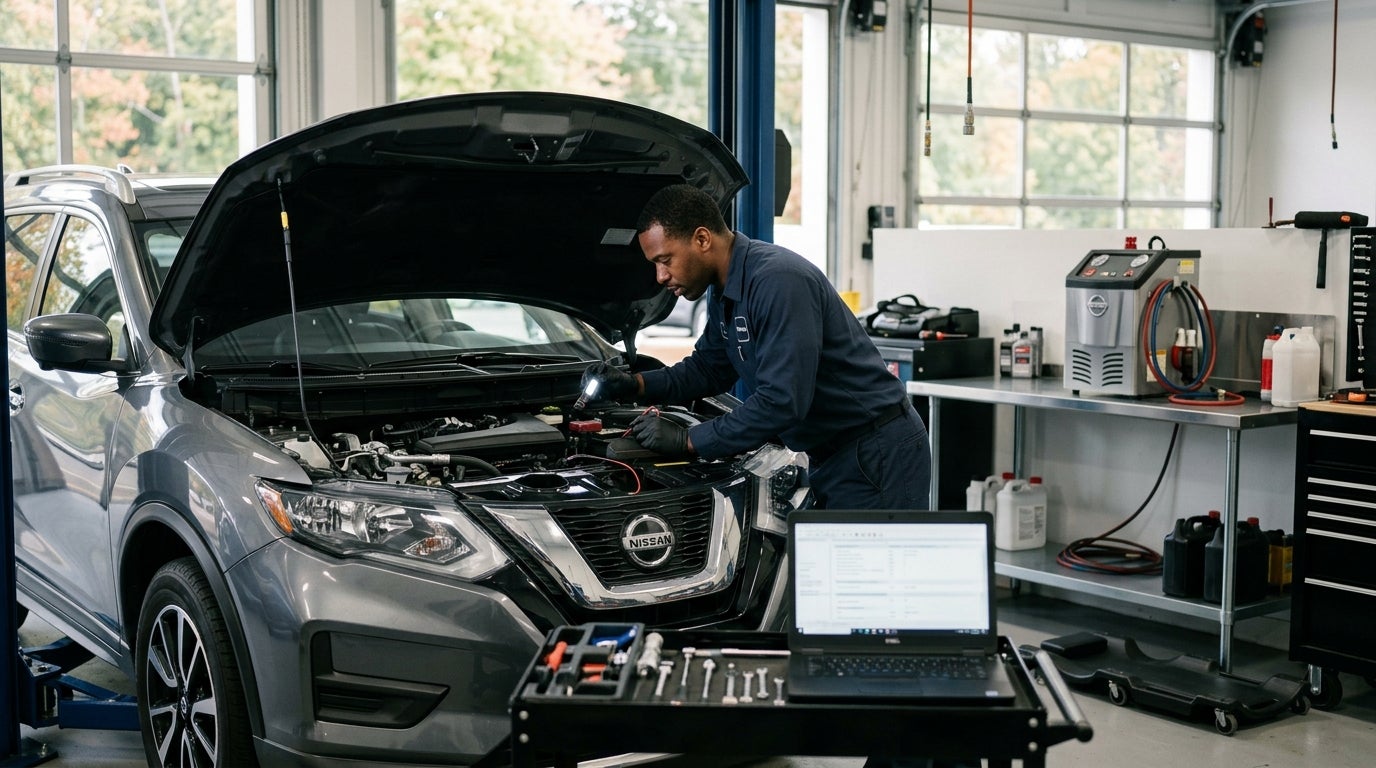
During routine maintenance visits, our team relies on advanced Nissan Consult diagnostic tools to scan the transmission control module for a CVTF deterioration date value. This digital metric tracks historical heat stress and operational loads rather than just counting odometer miles. If the scan indicates high thermal breakdown, we recommend a fluid change even if you have not hit the standard mileage mark yet. Staying proactive with this service protects sensitive internal hydraulic valves and smooth pulley operation.
Skipping these inspections allows oxidized fluid and tiny metal particles to circulate through the valve body, which can clog internal ports and cause jerky acceleration. For busy commuters looking for fast routine checks between major service windows, our convenient Nissan Express Service option provides quick multi-point inspections to keep your vehicle running smoothly.
Table of Contents
- Can Standard ATF Fluid Be Used in a Nissan Xtronic CVT?
- What Causes a Nissan CVT to Enter Limp Mode?
- How Long Do Modern Nissan Xtronic CVT Transmissions Last with Proper Maintenance?
- What Is D-Step Logic and How Does JATCO Engineering Impact Performance?
- What Xtronic CVT Maintenance Services Are Offered at Barberino Nissan?
Can Standard ATF Fluid Be Used in a Nissan Xtronic CVT?
Standard automatic transmission fluid must never be used in a Nissan Xtronic CVT under any circumstances. CVTs require highly specialized synthetic fluids, such as Genuine Nissan NS-3 CVT Fluid or NS-2 depending on model specifications, which are engineered specifically to provide necessary traction between the smooth steel belt and pulleys.
Traditional automatic transmission fluids contain friction-modifying additives designed for slipping clutch packs. If introduced into a CVT, traditional fluid will eliminate the precise surface friction required for the steel belt to grip the rotating pulleys. This results in immediate belt slippage, catastrophic thermal buildup, and permanent scoring across the pulley faces within miles of driving.
- NS-3 CVT Fluid: Formulated for modern high-pressure Xtronic CVT systems to withstand elevated thermal stress and prevent oxidation.
- Viscosity Control: Maintains steady hydraulic pressure across extreme temperature ranges to ensure rapid pulley adjustments.
- Anti-Foaming Properties: Prevents air bubble formation within high-pressure hydraulic lines during high-rpm operation.
Using non-approved fluid or generic aftermarket ATF can also void your factory drivetrain warranty coverage. Whenever your vehicle comes into our service bay, we only use genuine factory-formulated fluids designed specifically for your transmission's internal engineering.
What Causes a Nissan CVT to Enter Limp Mode?
A Nissan transmission enters fail-safe or limp mode primarily when internal fluid temperatures exceed safe operating limits, triggering the control module to reduce engine output and lock vehicle speed. This protective system engages to prevent permanent mechanical failure while allowing you to safely pull off the road.
Sustained high-speed highway driving during summer heat, combined with old or degraded fluid, is a frequent trigger for limp mode. As fluid degrades, its thermal conductivity drops, causing heat to build up inside the transmission casing faster than the cooling radiator can shed it. When the transmission computer senses temperatures rising past critical thresholds, it limits engine torque and restricts acceleration to protect internal seals and metal surfaces.
Other potential causes for limp mode include low fluid levels caused by small cooler line leaks, faulty speed sensors, or an obstructed transmission fluid cooler. If your vehicle ever enters limp mode, pull over safely, turn off the engine, and allow the system to cool down completely. Having a certified technician pull diagnostic trouble codes is essential to resolve the underlying heat issue before returning to normal highway driving.
How Long Do Modern Nissan Xtronic CVT Transmissions Last with Proper Maintenance?
With regular fluid replacements every 30,000 to 60,000 miles and gentle driving habits, modern Nissan Xtronic CVT transmissions routinely last between 150,000 and 200,000 miles. Preventing excessive heat and maintaining clean fluid are the two most critical factors in maximizing total drivetrain longevity.
Many drivers who daily commute into New Haven face dense traffic and frequent stop-and-go acceleration, which can generate extra heat compared to steady highway cruising. Drivetrain engineering has advanced significantly over recent design generations, featuring stronger steel belts, refined hydraulic pump controls, and improved thermal management systems that resist wear far better than early continuous variable designs.
Taking care of your drivetrain is part of overall vehicle health, much like staying on top of specialized maintenance schedules for advanced powertrains, including electric vehicle maintenance programs. Treating your transmission with clean fluid, allowing warm-up time on cold mornings, and avoiding aggressive jackrabbit starts will ensure your car remains reliable for years to come.
What Is D-Step Logic and How Does JATCO Engineering Impact Performance?
D-Step Logic is proprietary transmission software programming developed by JATCO and Nissan that simulates traditional stepped gear shifts during moderate to heavy acceleration. This system provides drivers with a responsive, familiar acceleration feel while eliminating the continuous high-rpm engine drone associated with older continuous variable transmissions.
Built by JATCO—the primary transmission manufacturing partner for Nissan—modern Xtronic CVT units combine wide ratio spreads with precision electronic hydraulic valves. Under light throttle, the system continuously adjusts ratios for optimal fuel economy. When you press firmly on the accelerator pedal, D-Step Logic momentarily holds pre-set ratio points to create subtle, crisp drops in rpm that feel just like a conventional multi-speed automatic gearbox.
This software refinement improves driving engagement without sacrificing any of the smooth efficiency benefits inherent to variable pulley designs. Whether you are driving a efficient daily sedan or an option from our pre-owned performance collection, the combination of strong mechanical pulleys and smart software delivers refined performance across every driving scenario.
What Xtronic CVT Maintenance Services Are Offered at Barberino Nissan?
At Barberino Nissan, our certified technicians offer complete Xtronic CVT diagnostic and maintenance services using specialized factory tools and genuine OEM parts. From electronic fluid deterioration scans to complete fluid flushes and filter replacements, we ensure your drivetrain gets exact manufacturer care.
When you bring your vehicle to our facility, our technicians perform a full visual and digital checkup on your transmission system:
- Diagnostic Deterioration Scanning: Checking digital heat logs via Nissan Consult equipment to determine exact fluid condition.
- Genuine Fluid Replacement: Draining degraded fluid and refilling with factory-approved NS-3 CVT Fluid.
- Filter & Screen Inspection: Cleaning internal fluid strainers and replacing external inline filters to restore hydraulic flow.
- Cooling System Checks: Inspecting transmission cooler lines, fittings, and thermal bypass valves for leaks or blockages.
Protecting your drivetrain starts with regular, professional care. You can easily schedule your service appointment online today or call our service desk at (203) 265-1611. Our team is conveniently located at our 505 N Colony Rd address, ready to keep your Nissan driving with smooth confidence.
© 2026 Barberino Nissan. All rights reserved.